 11
11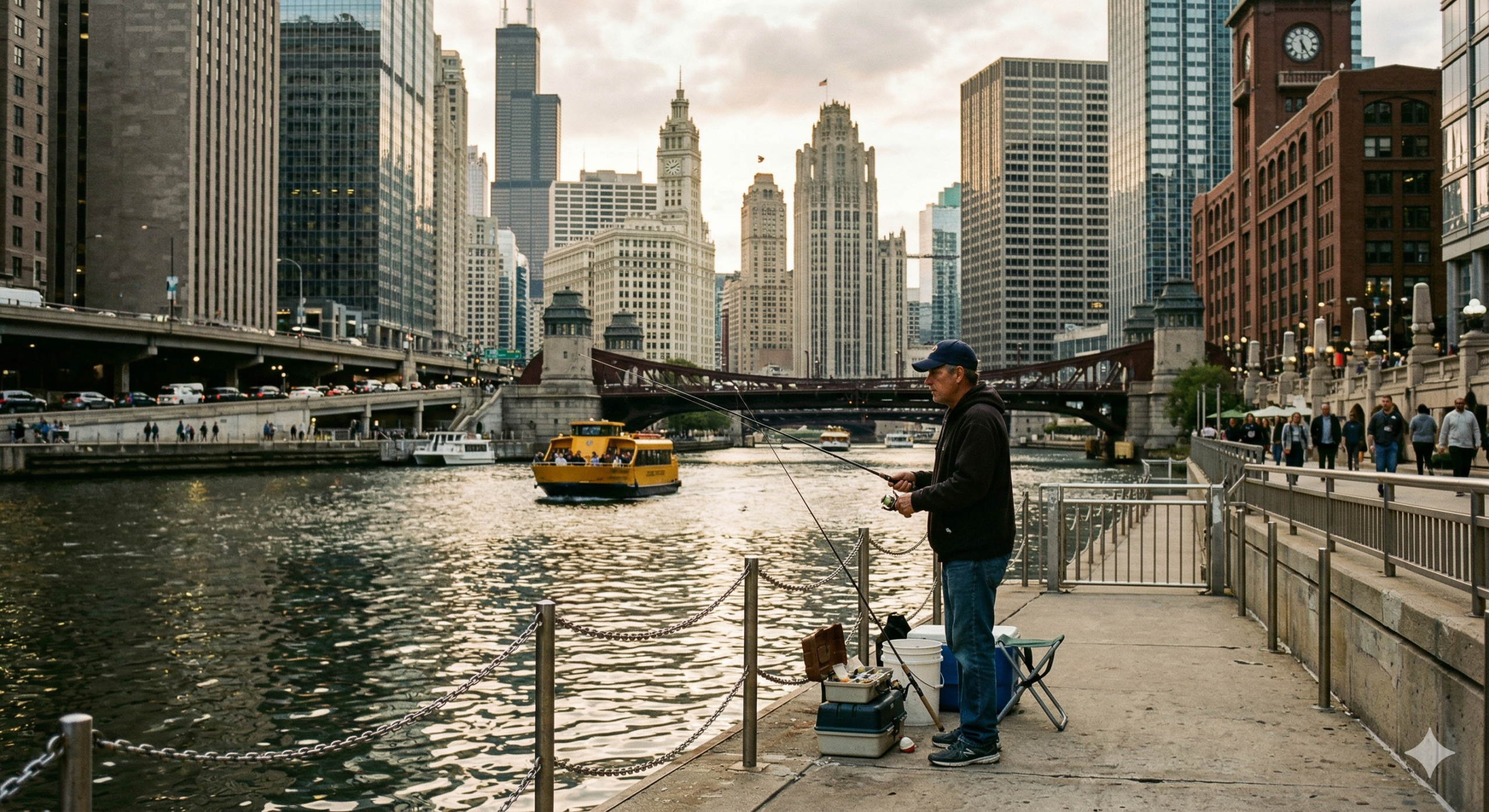
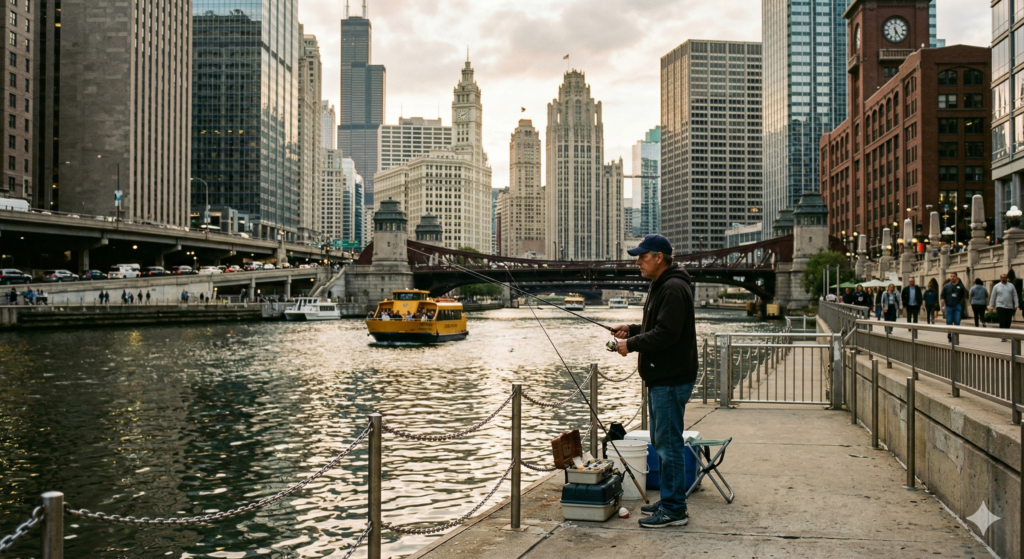
You don’t need a lakeside cabin, a truck, or a weekend road trip to go fishing. You might have a perfectly good fishing spot a 20-minute walk from your front door — and you might not even know it yet.
Urban fishing is one of the fastest-growing outdoor hobbies in the world, and for good reason. It’s accessible, affordable, surprisingly productive, and a welcome escape from concrete and screens — without ever leaving the city limits.
Whether you’ve never held a rod before or you’re a weekend angler looking to fish more often without the commute, this guide covers everything you need to know to get started with urban fishing in 2025.
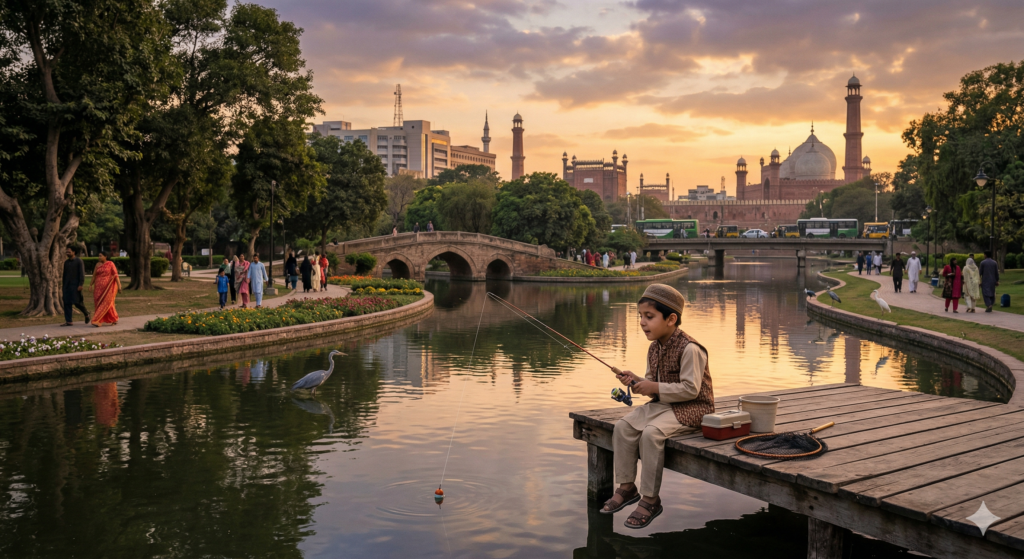
Urban fishing is exactly what it sounds like: fishing in and around cities, towns, and metropolitan areas. Instead of remote rivers and backcountry lakes, urban anglers fish from:
The definition is broad. Some urban anglers cast from manicured park banks surrounded by joggers and dog walkers. Others dip lines from industrial canal bridges in gritty city neighborhoods. Both count — and both can produce fish.
What unites them is the setting: fishing happens within, or in close proximity to, urban infrastructure. No wilderness required.
Urban fishing has surged in popularity over the last decade, and several factors explain why.
Cities have invested in urban waterways. Many municipal governments have poured money into cleaning up rivers, stocking ponds, and creating accessible fishing programs. Cities like Chicago, London, New York, and Los Angeles now have active urban fishing initiatives, some run by local parks departments or fishing charities.
It’s incredibly accessible. You don’t need a car, a boat, or an expensive overnight trip. For many city dwellers, a fishing spot is reachable by foot, bike, or public transit. This removes one of the biggest traditional barriers to the sport.
It fits modern schedules. An after-work session on a city canal fits in where a full weekend lake trip doesn’t. Urban fishing works in the gaps — a couple of hours on a Tuesday evening can be enough.
It appeals to a new generation of anglers. Younger city-based anglers who grew up without traditional fishing access are discovering the sport through urban waterways. In cities across the US, UK, and Europe, urban fishing programs have become gateways for people who would never otherwise pick up a rod.
More than most beginners expect. Urban waters host a wide variety of species, and some city fishing spots are genuinely excellent fisheries.
Common urban fish species include:
The species available to you will depend heavily on your location, local climate, and whether your city has an active stocking program. A quick search for your local parks department or fish and wildlife agency will usually tell you what’s been stocked and where.
Locating fishable water in a city is one of the most satisfying parts of getting into urban angling. Here are the most reliable places to look.
Most city parks with any body of water — even a modest pond — are worth checking. Parks departments in major cities often stock these ponds regularly with panfish, trout, or bass, specifically to encourage urban fishing. These spots also tend to have good bank access, paved paths, and parking, making them ideal for beginners.
Urban canals — originally built for industry and transport — are now some of the best fishing venues in many cities. In the UK alone, thousands of miles of navigable canal pass through cities like Birmingham, Manchester, and London. These canals hold large populations of carp, perch, tench, and bream. In the US, cities like New Orleans and Chicago have accessible canal systems worth exploring.
Many major rivers run directly through cities, and sections of these rivers can hold substantial fish populations. Urban river fishing does require some research: water quality varies significantly from stretch to stretch, and access points can be limited by private land, highways, or infrastructure. But where public access exists — particularly near parks, greenways, and riverwalk developments — urban rivers can be productive fisheries.
Cities need water. Many have reservoirs on their outskirts or even within their boundaries, and these are often open to public fishing. Urban reservoirs frequently hold excellent populations of bass, perch, trout, and pike. Check with your local water authority to see if day tickets or annual permits are available.
This is the urban fishing secret that most beginners overlook. Retention ponds — those flat, often fenced, water features tucked into apartment complexes, business parks, and highway medians — can hold surprisingly large fish. Carp, bass, and catfish frequently colonize these ponds, and because they receive almost no fishing pressure, the fish can grow very large. Access can be tricky (always check whether fishing is permitted), but when you find a legal and accessible one, the fishing can be outstanding.
If you live in a coastal city, harbors and public piers can be exceptional fishing spots. Species vary by region: flounder, striped bass, and bluefish in the northeast US; snook and snapper in Florida and Gulf cities; various marine species off UK, European, and Australian coastal urban areas. Salt water fishing from public harbor infrastructure is one of the most vibrant forms of urban angling.
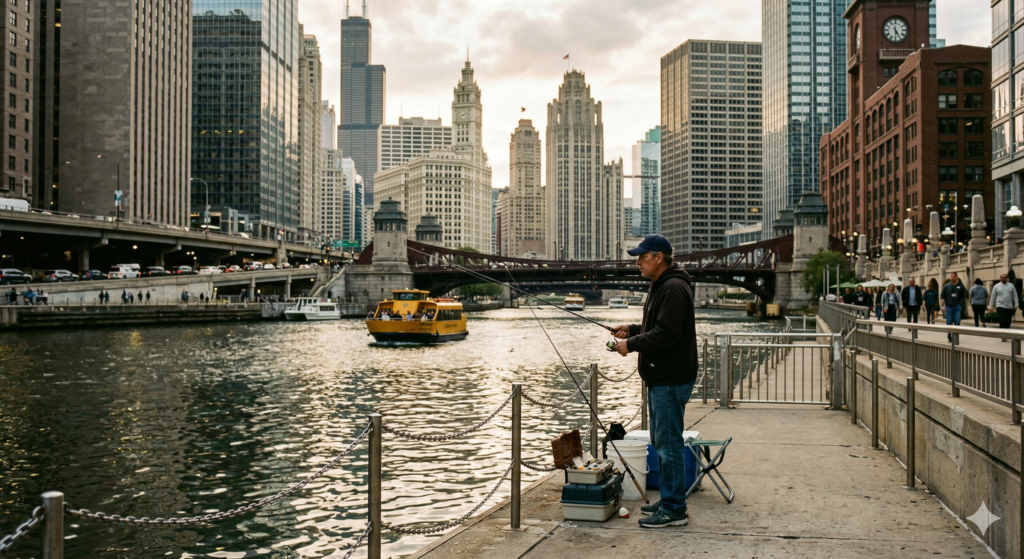
You don’t have to explore blindly. Several resources make spot-finding much easier.
In most cases, yes — and this is one of the first things to sort out before you fish. Fishing license requirements apply to city ponds, urban rivers, canals, and reservoirs the same way they apply to remote lakes.
In the United States, fishing licenses are issued at the state level. Requirements, costs, and exemptions (children under a certain age, seniors, free fishing days) vary by state. Most states offer online purchase through their fish and wildlife agency website, and a basic freshwater license typically costs between $15 and $50 per year.
In the UK, a rod fishing license is required for anyone 13 and over fishing in England and Wales (Scotland has no rod license requirement). These are purchased online through the Environment Agency.
Always check local regulations before fishing. Some urban waterways — particularly sections of canals, private lakes, and club-managed venues — require additional permits on top of a standard license.
One of the biggest advantages of urban fishing is that you don’t need much gear. A basic setup costs very little and fits in a backpack.
The essentials:
Optional but useful: a small tackle box, polarized sunglasses (helps you see fish through the water), needle-nose pliers for hook removal, and a cloth or small landing net.

Urban fishing spots are shared spaces. A few simple practices keep things enjoyable for everyone.
Leave no trace. Pack out your rubbish — including used line, packaging, and bait containers. Discarded fishing line is one of the most serious hazards to urban wildlife.
Be a good neighbor. You’re fishing in a public space used by walkers, cyclists, and dog owners. Keep your gear tidy, be courteous when others walk by, and cast with awareness of people around you.
Practice proper catch and release. Wet your hands before handling fish, support them properly, and return them quickly. In many urban fisheries, catch and release is required by regulation.
Know the safety risks. Urban fishing environments can include uneven banks, low bridges, overhead power lines, and slippery concrete. Cast carefully and avoid fishing alone at night in isolated areas.
Check fish consumption advisories. Urban water can carry pollutants that accumulate in fish tissue. Before eating any fish caught in city water, check with your local environmental or health agency for consumption advisories specific to that body of water.
Absolutely. The idea that fishing requires pristine wilderness is outdated. Some of the most engaging fishing available today happens in the heart of cities — and increasingly, urban waterways are healthier and more productive than they were a generation ago.
Urban fishing offers something beyond just fish. It’s a reason to slow down, to sit by water in the middle of a busy city, to practice patience and attention in a world that rarely rewards either. Many anglers describe their city fishing sessions as meditative — a genuine mental reset that happens to occasionally result in a great catch.
Whether you’re chasing carp in a park pond or pulling bass out of a harbor at dawn, the mechanics are the same as any fishing. The difference is the backdrop — and the fact that you can be home in time for dinner.
Here’s a simple action plan for your first session:
Urban fishing is one of the most accessible, low-barrier ways to get into the outdoors — and it’s one that’s growing rapidly around the world as cities invest in their waterways and a new generation of anglers discovers what’s hiding under the surface of their local pond or canal.
You don’t need to live near wilderness to be a fisher. You just need water, a license, a basic rod, and some bait. In most cities, all four are within reach this weekend.
Start close to home, start simple, and be patient. The fish are out there — closer than you think.
Can you fish anywhere in a city? Not everywhere. You need to fish in publicly accessible water, hold the appropriate license, and comply with any local bylaws or access restrictions. Always check before fishing a new spot.
Is city fish safe to eat? It depends on the specific waterway. Always check local fish consumption advisories from your state or local health or environmental agency before eating any urban-caught fish.
What is the best bait for urban fishing? Nightcrawlers (earthworms) are the most versatile and widely effective bait for urban freshwater fishing. Sweet corn and bread are also excellent for carp. Small soft plastic lures work well for bass.
Do you need a fishing license for a city park pond? In most cases, yes. A standard state or regional fishing license applies to the vast majority of public freshwater, including city park ponds. Some parks run special free-fishing days — check locally.
What is the best time of day for urban fishing? Early morning (around sunrise) and late evening are typically most productive, as fish are more active in lower light and cooler temperatures. Midday sessions in summer are often slower.